OpenAI says GPT-6 can design proteins, and 35 of 322 bound in lab tests
On 24 November 2026, OpenAI published a paper saying its GPT-6 models can design new proteins using reasoning and code, without calling specialized biology models. With lab partner Onava, it tested 322 small proteins based on GPT-6.2's designs: 35 bound their targets. Specialized models still helped pick sequences and candidates, and binding is not yet a medicine.
The short version
- 01OpenAI says GPT-6 models can design protein shapes and sequences using only reasoning and general coding tools.
- 02In lab tests with Onava, 35 of 322 small proteins (10.9%) bound their intended targets across five targets.
- 03Redesigned antibody parts kept binding in 70% and 66% of two separate lab tests.
- 04Specialized AI tools still helped pick sequences and candidates, so end-to-end design is not proven.
- 05These are OpenAI's own results from a preprint, not yet checked by outside scientists.
At a glance
| Status | Confirmed by OpenAI |
|---|---|
| Published | 24 November 2026 |
| Model | GPT-6.2 (lab tests), plus an internal model |
| Lab partner | Onava |
| Minibinders tested | 322, against 5 targets |
| Bound their target | 35 (10.9%) |
| Paper | A preprint: GPT-6 as a Universal Foundation Model for Protein Biology |
What did OpenAI announce?
OpenAI published a research post and a preprint saying its GPT-6 family can design new proteins. Proteins do much of the work in living cells, and their shape decides what they do.
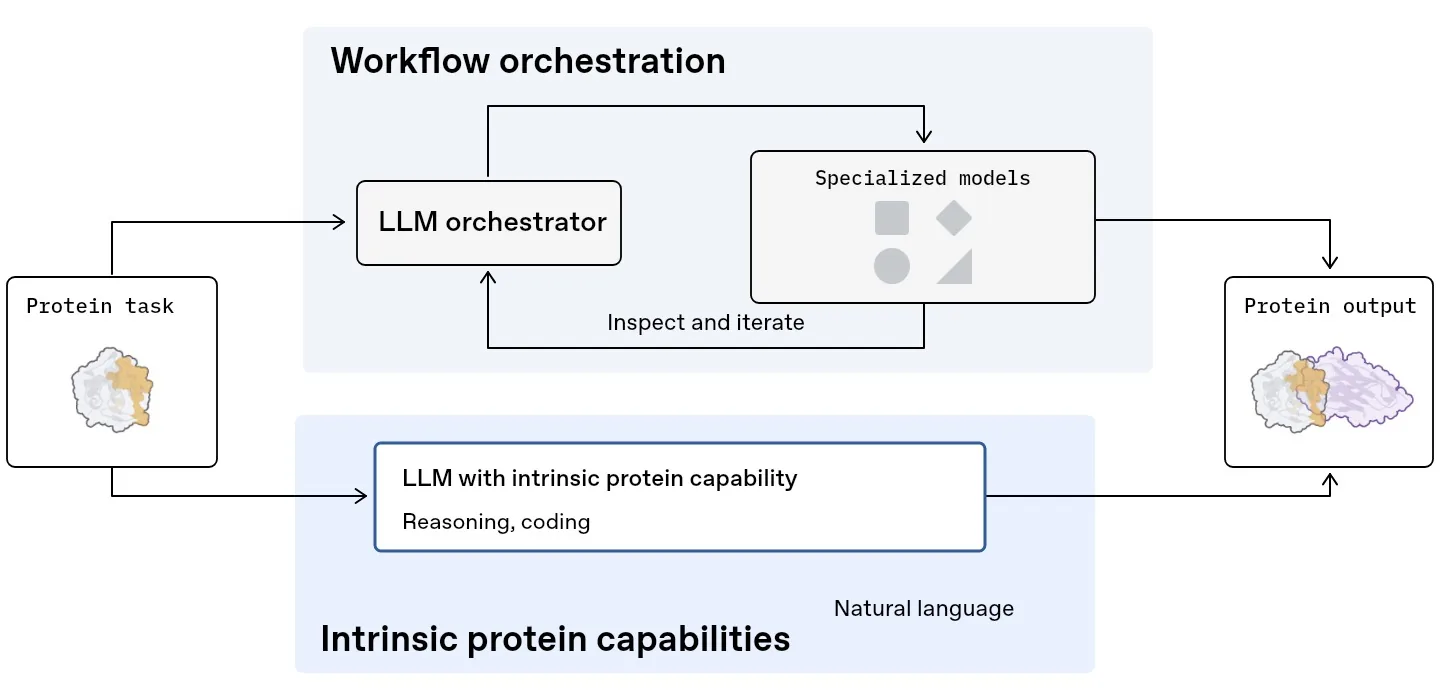
The company says the models can propose both a protein's three-dimensional shape and the order of its building blocks, using reasoning and general-purpose code. Older tools for this are specialized biology models that need expert setup.
What did the lab tests show?
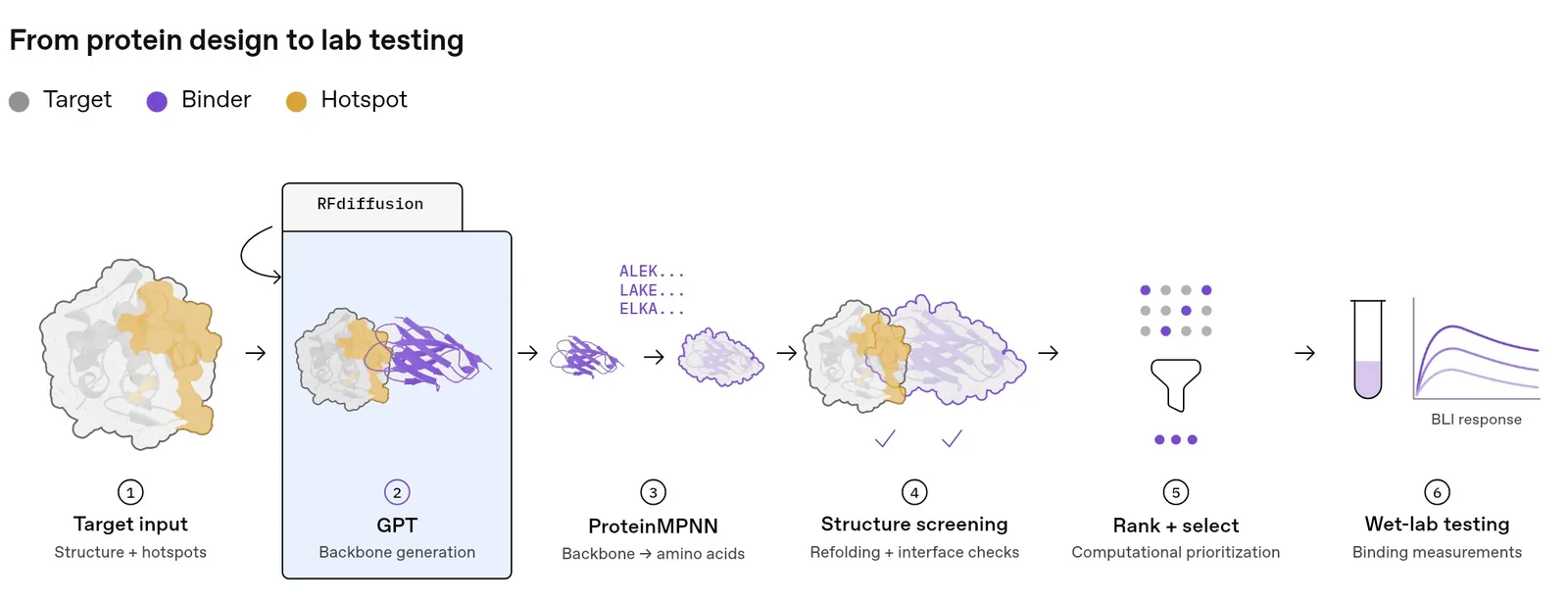
With its research partner Onava, OpenAI made proteins based on shapes designed by a pre-release GPT-6.2. It tested 322 small proteins, called minibinders, against 5 targets. Of those, 35 (10.9%) tested positive for binding.
In separate tests, GPT-6.2 redesigned parts of existing antibodies. Of 182 designs for six small antibodies, 128 (70%) showed signs of binding. Of 272 fragments based on five therapeutic antibodies, 179 (66%) did.
OpenAI itself notes that an earlier RFdiffusion study reported higher hit rates, but says those rates depend heavily on how strictly designs are filtered and how binding is defined.
What are the limits?
OpenAI says its campaign still relied on specialized models such as Boltz-2 to filter candidates, and that the results do not yet show end-to-end design without them. Predicting a full protein structure from its sequence remained a clear weakness.
It also warns that some benchmark results may partly reflect memorization, and that binding is only one step: specificity, stability, biological activity, safety and efficacy would still have to be shown.
Why does it matter?
If one general model can do the work of several specialist tools, scientists could describe what they want in plain language and test fewer designs. That is OpenAI's stated goal.
It follows a week of OpenAI science news, from the [GPT-6.2 Astra and Sol launch](/news/openai-gpt-6-2-astra-sol/) to its planet-hunting story today. This one has lab data, which makes it more concrete than a benchmark.
What does it mean for you?
Nothing changes in ChatGPT today. This is research, and OpenAI describes it as an early step, not a product or a medicine.
If you follow AI and health, the thing to watch is the follow-up: harder targets, effects on real cells, and results from scientists outside OpenAI. Until then, read the 10.9% as promising, not proven.
Most people can ignore the details. The plain-English point is that AI chatbots are being tested as lab partners, not only as writers. Our [earlier story on a Claude maths claim](/news/anthropic-mathematician-claims-claude-riemann-hypothesis/) shows the same pattern: big claims, with checks still to come.
What's next?
OpenAI says it wants to find minibinders for harder targets, test whether designs cause a biological effect, and widen to molecules such as RNA and PROTACs. It also says it is weighing biosecurity risks under its Preparedness Framework.
Questions people ask
What is a minibinder?
A very small designed protein meant to attach to a chosen target protein, such as a molecule some cancers use to hide from the immune system.
Did GPT-6 design proteins on its own?
Only partly. It designed shapes and some sequences, but specialized models helped supply sequences and filter candidates, and OpenAI says full end-to-end design is not yet shown.
Who ran the lab tests?
OpenAI's research partner Onava made and tested the proteins.
Is this a new medicine?
No. Binding a target is an early step. OpenAI says further work is needed on specificity, stability, activity, safety and efficacy.
Has anyone outside OpenAI checked it?
Not yet, as far as OpenAI's post shows. It is a preprint and the company's own results.
Sources
Why "Confirmed"? We label a story "Confirmed" when the company or government announced it itself. Spotted an error? Email hello@openloopnews.com and we will correct it.