The White House renamed AI “Super Intelligence”: what the order says
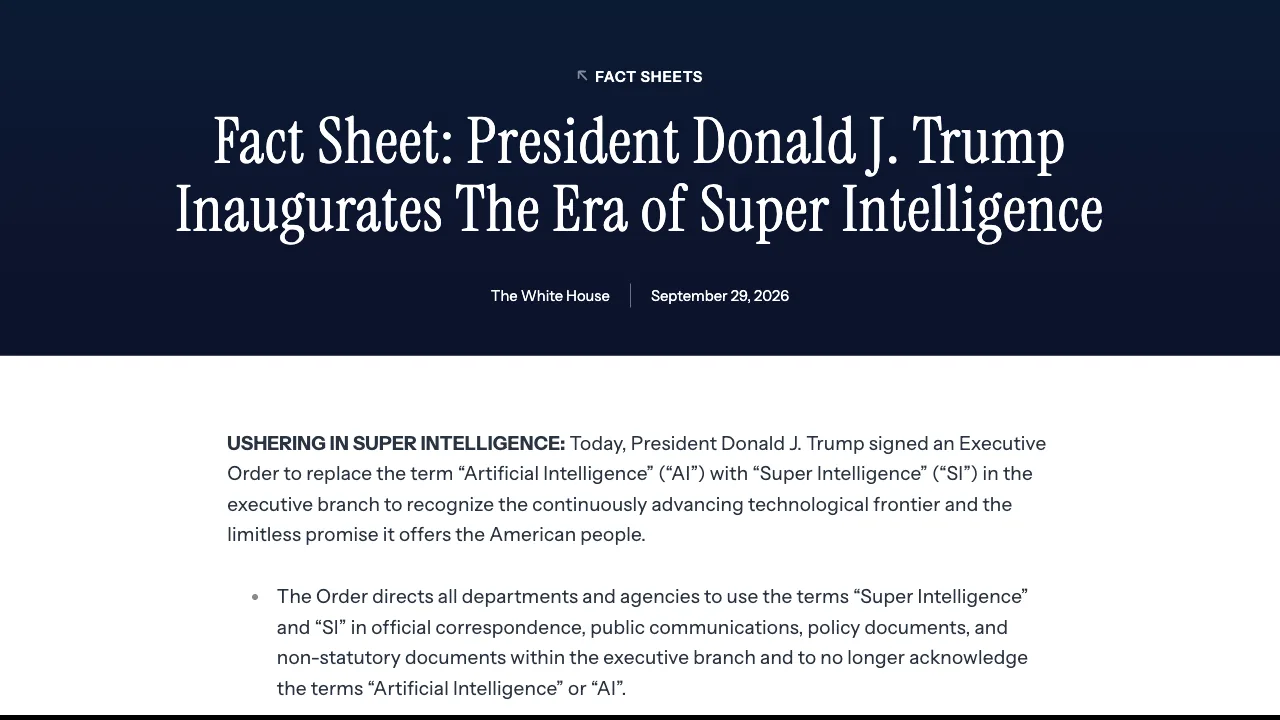
On 29 September 2026, President Donald Trump signed an executive order telling US federal agencies to use the terms “Super Intelligence” and “SI” in official documents and to no longer acknowledge “Artificial Intelligence” or “AI”. The President's science adviser will propose an official definition, with no deadline set. The White House also launched America.gov, a single website for government services.
The short version
- 01US agencies must use “Super Intelligence” (SI) in official letters, public messages and policy documents.
- 02An official definition of Super Intelligence is still to come, and the fact sheet sets no deadline.
- 03The White House also launched America.gov; Nextgov reports a separate AI safety accord with tech leaders.
At a glance
| What | Executive order renaming AI in US government documents |
|---|---|
| Signed | 29 September 2026 |
| New terms | “Super Intelligence” and “SI” |
| Applies to | Departments and agencies in the executive branch |
| Definition | To be proposed by the President's science adviser; no deadline given |
| Also announced | America.gov, a single website for federal services |
What does the Super Intelligence order say?
President Donald Trump signed the executive order on 29 September 2026. According to the White House fact sheet, it replaces the term “Artificial Intelligence” (“AI”) with “Super Intelligence” (“SI”) in the executive branch “to recognize the continuously advancing technological frontier and the limitless promise it offers the American people.”
In practice, all departments and agencies must use “Super Intelligence” and “SI” in official correspondence, public communications, policy documents and non-statutory documents, and no longer acknowledge the terms “Artificial Intelligence” or “AI”.
Who decides what “Super Intelligence” means?
The order asks the Assistant to the President for Science and Technology to propose a federal definition of “Super Intelligence” and “SI” that reflects the state of the technology. The fact sheet does not give a deadline for that definition.
What is America.gov?
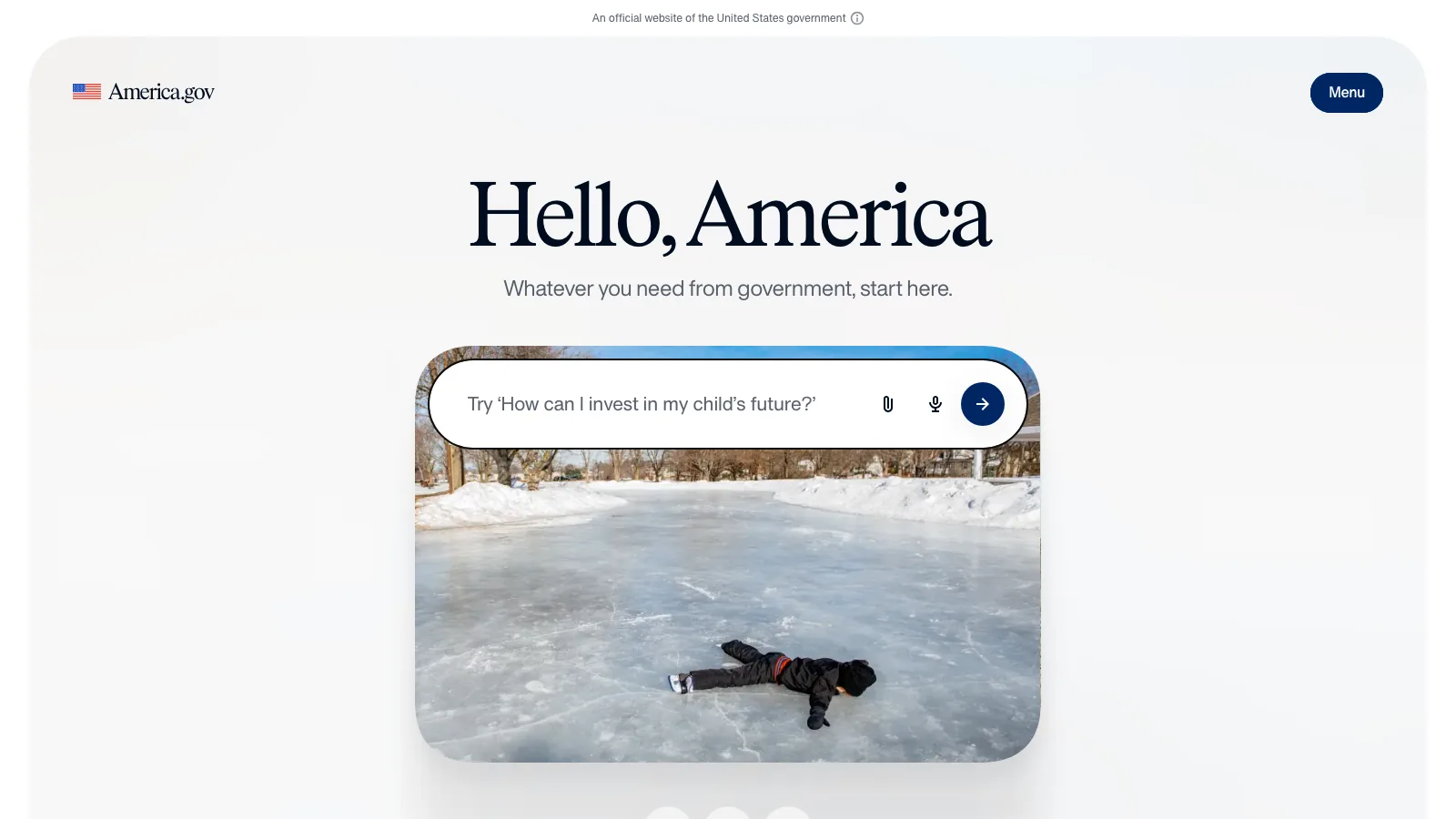
On the same day, the White House launched America.gov. Its fact sheet calls it “a secure, intelligent, and service-oriented single point of entry” where people can sign in, ask questions in plain language and get answers.
Right now, Americans can ask any question on America.gov and get an up-to-date answer, the fact sheet says. Later this year, they will be able to complete tasks like passport renewal and Medicare enrollment.
It covers public-facing federal services that serve more than 100,000 users in a 12-month period. Tax filing through the IRS and national-security-sensitive services are left out, and agencies are told to integrate Login.gov with America.gov.
What is the AI safety accord with tech CEOs?
Nextgov reports that an accord was signed by Trump, Google CEO Sundar Pichai, Anthropic CEO Dario Amodei, Meta CEO Mark Zuckerberg, OpenAI President Greg Brockman, xAI CEO Elon Musk and Nvidia CEO Jensen Huang.
According to Nextgov, it describes four layers of controls and audits: internal controls to monitor models during training and deployment, an internal team to oversee those controls, independent external auditors, and an independent committee that reviews their reports.
The White House fact sheet on the order does not mention the accord, so we label this part Reported.
We agreed to a number of things that include joint monitoring, board special committees, just generally grading each other's homework.
Elon Musk, xAI CEO, as quoted by Nextgov
Why does it matter?
For now, the order changes the words the US government uses, not the technology itself. The practical change for most people is America.gov, which puts a question-and-answer service in front of federal services.
The reported accord is the part to watch: Nextgov describes independent audits of the most advanced models, but its report does not say whether the accord is binding.
What happens next?
The science adviser's definition of “Super Intelligence” is the next formal step, and no date has been set. America.gov is due to add passport renewal and Medicare enrollment later this year.
Questions people ask
Is the US government banning the word AI?
In official documents of the executive branch, yes: the order tells departments and agencies to use “Super Intelligence” and “SI” and to no longer acknowledge “Artificial Intelligence” or “AI”. The fact sheet describes it as applying within the executive branch.
When was the Super Intelligence executive order signed?
On 29 September 2026, according to the White House fact sheet.
What can you do on America.gov?
Ask questions in plain language and get up-to-date answers now. Later this year, the White House says, it will handle tasks like passport renewal and Medicare enrollment.
Did tech CEOs sign an AI safety accord with the White House?
Nextgov reports that leaders from Google, Anthropic, Meta, OpenAI, xAI and Nvidia signed one. The White House fact sheet on the order does not mention it, so we label it Reported.
Sources
- PrimaryThe White House: Fact Sheet, President Donald J. Trump Inaugurates The Era of Super Intelligence (29 Sep 2026)
- PrimaryThe White House: Fact Sheet, America.gov (29 Sep 2026)
- CoverageNextgov: White House unveils super intelligence executive order and industry accord (29 Sep 2026)
Why "Confirmed"? We label a story "Confirmed" when the company or government announced it itself. Spotted an error? Email hello@openloopnews.com and we will correct it.