Apple opens a health AI study for 200,000 people in the US
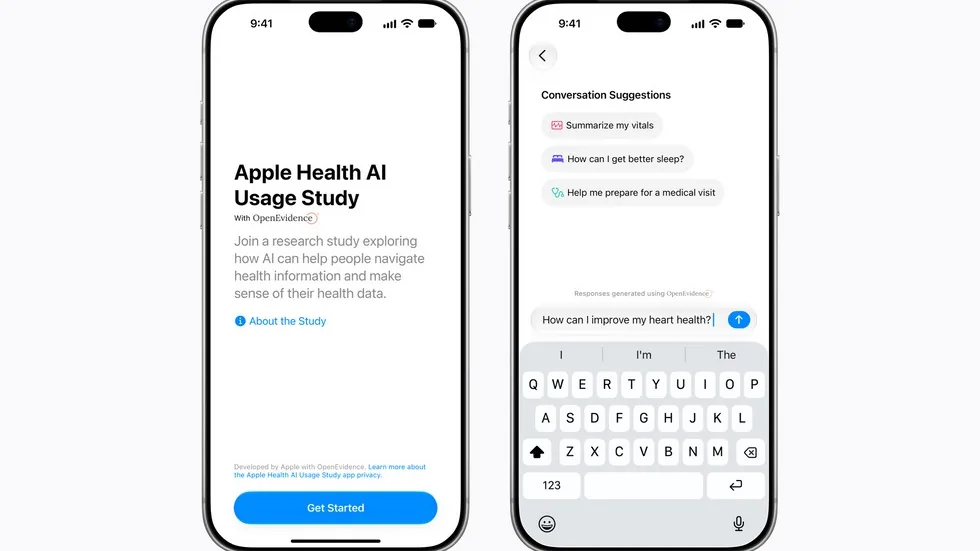
On 15 November 2026, Apple launched the Apple Health AI Usage Study in the US, a research study and app made with OpenEvidence. Up to 200,000 people aged 21 or older can ask everyday health questions and see medical citations. You need an iPhone 15 Pro or later with Apple Intelligence on, running iOS 26 or later.
The short version
- 01Apple launched a research study, not a new Apple Health feature.
- 02It is open to up to 200,000 people aged 21 and older in the United States.
- 03Participants ask everyday health questions and see linked, peer-reviewed citations.
- 04Sharing HealthKit data such as sleep or resting heart rate is optional.
- 05You need an iPhone 15 Pro or later with Apple Intelligence, on iOS 26 or later.
At a glance
| Status | Confirmed (Apple's own announcement) |
|---|---|
| Announced | 15 November 2026 |
| Company | Apple, with OpenEvidence |
| Study | Apple Health AI Usage Study |
| Size | Up to 200,000 participants |
| Who | Age 21 or older, in the United States |
| Device | Apple Intelligence iPhone (iPhone 15 Pro or later), iOS 26 or later |
| Data | Study data will not be used to train AI models, Apple says |
What is the Apple Health AI Usage Study?
It is a virtual research study, with its own app, that Apple launched in the US on 15 November 2026. Apple says it wants to understand how people use conversational health AI, and what drives trust, answer quality, understanding and everyday health actions.
Apple says the results should help design health AI responsibly, for Apple and for the industry.
What can you do in the study app?
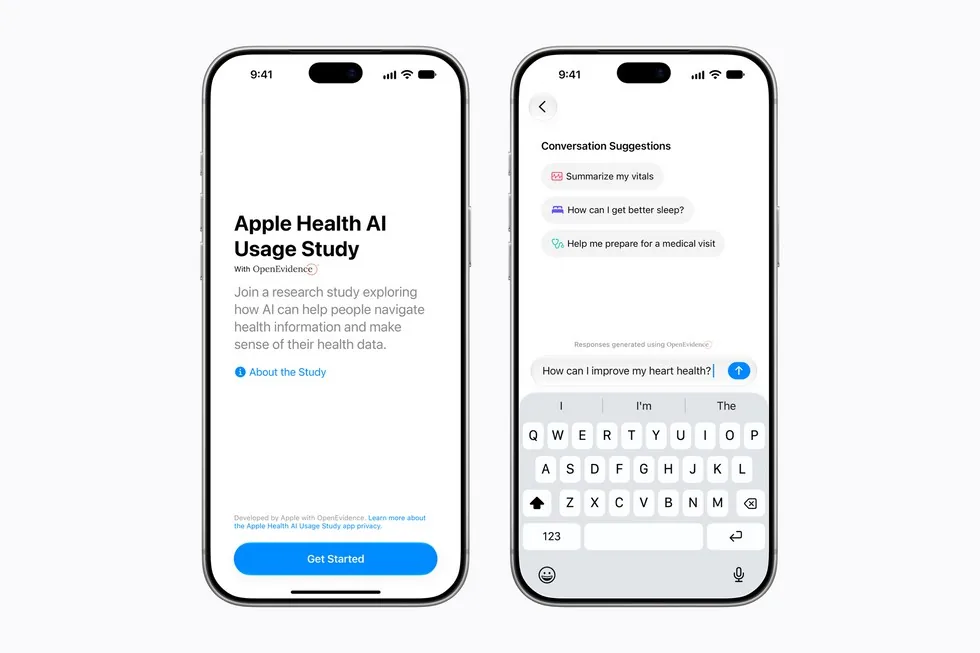
Participants can ask everyday health questions and get answers in approachable language, with linked, peer-reviewed citations. The answers come from OpenEvidence, a clinical AI platform that Apple says uses sources such as The New England Journal of Medicine, JAMA and Nature.
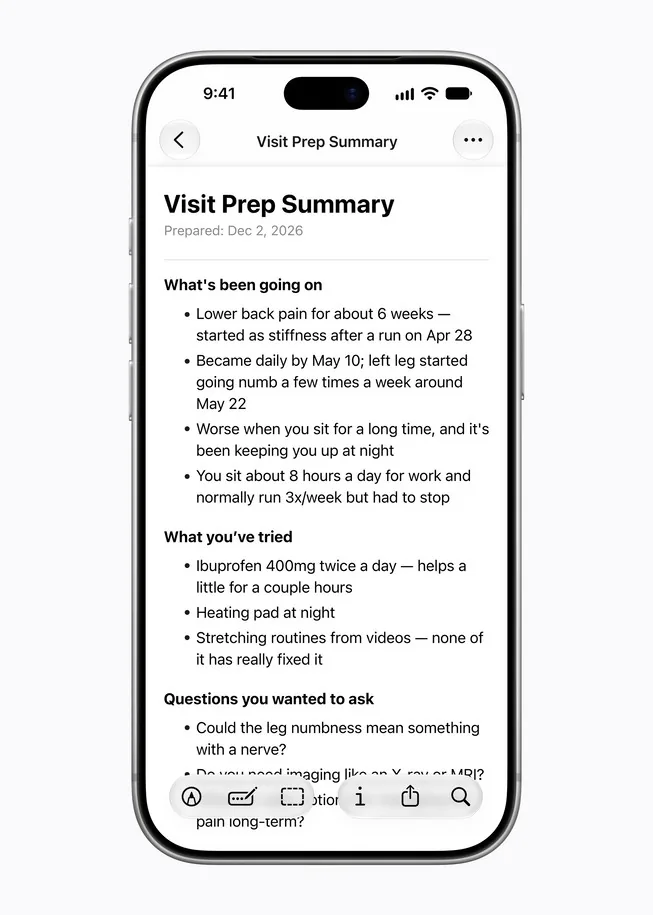
The study also explores whether AI can help people prepare for visits to their own doctors. Apple's pictures show a Visit Prep Summary listing symptoms, what you tried and questions to ask.
What happens to your health data?
Sharing HealthKit data, such as resting heart rate, activity, sleep or lab results, is your choice. So is sharing survey responses.
Apple says the study was designed with privacy protections and that study data will not be used to train AI models. The app has safety guardrails meant to detect certain concerning questions and suggest following up with a provider.
Who can join?
The study is open to up to 200,000 eligible people aged 21 and older across the United States. You need an Apple Intelligence-enabled iPhone (iPhone 15 Pro or later) running iOS 26 or later. Apple says to download the study app to learn more and choose to enroll.
Why does it matter?
Many people already ask chatbots about symptoms. Apple is studying that behaviour with real participants before it builds anything of its own, and it is doing it with a medical-source tool rather than a general chatbot.
What does it mean for you?
If you live outside the US, are under 21, or have an older iPhone, you cannot join, and nothing changes for you. If you can join, treat it as research: you are helping Apple learn, not getting a doctor.
Apple's own page says LLM health tools can give responses that are incomplete or unclear. So use any health chatbot to prepare questions, and take real decisions to a doctor. The visit-prep idea is the useful part for most people: a short list of what has been going on and what you want to ask.
Think about what you share. Linking sleep or lab results can make answers more relevant, but it is optional, and you can join without it. We covered a similar choice in [Claude's personal finance feature](/news/claude-personal-finance-bank-accounts/), where you also decide what to connect.
It is also a sign of where Apple may go. Apple Intelligence is already part of its phones, and our story on [Apple's Pages and Keynote AI](/news/apple-keynote-pages-numbers-ai-assistant/) showed it adding AI to its apps. We will report if Apple turns this study into a product.
What's next?
Apple has not said whether the study will become an Apple Health feature. Its announcement describes research only.
Questions people ask
Is this a new feature in the Health app?
No. It is a separate study app. Apple has not announced any Health feature based on it.
Who is OpenEvidence?
Apple describes it as a leading clinical AI platform widely used by healthcare professionals.
Does the app replace a doctor?
No. Apple says the study explores how AI could help people prepare for visits with their own doctors.
Can I join from outside the US?
No. Apple says the study is open to people across the United States.
Sources
- PrimaryApple Newsroom: Apple launches research study to explore the use of AI for health
- CoverageTechCrunch: Apple launches new app to study how people use AI for health
Why "Confirmed"? We label a story "Confirmed" when the company or government announced it itself. Spotted an error? Email hello@openloopnews.com and we will correct it.