Google gets its first AI response from a TPU chip in orbit
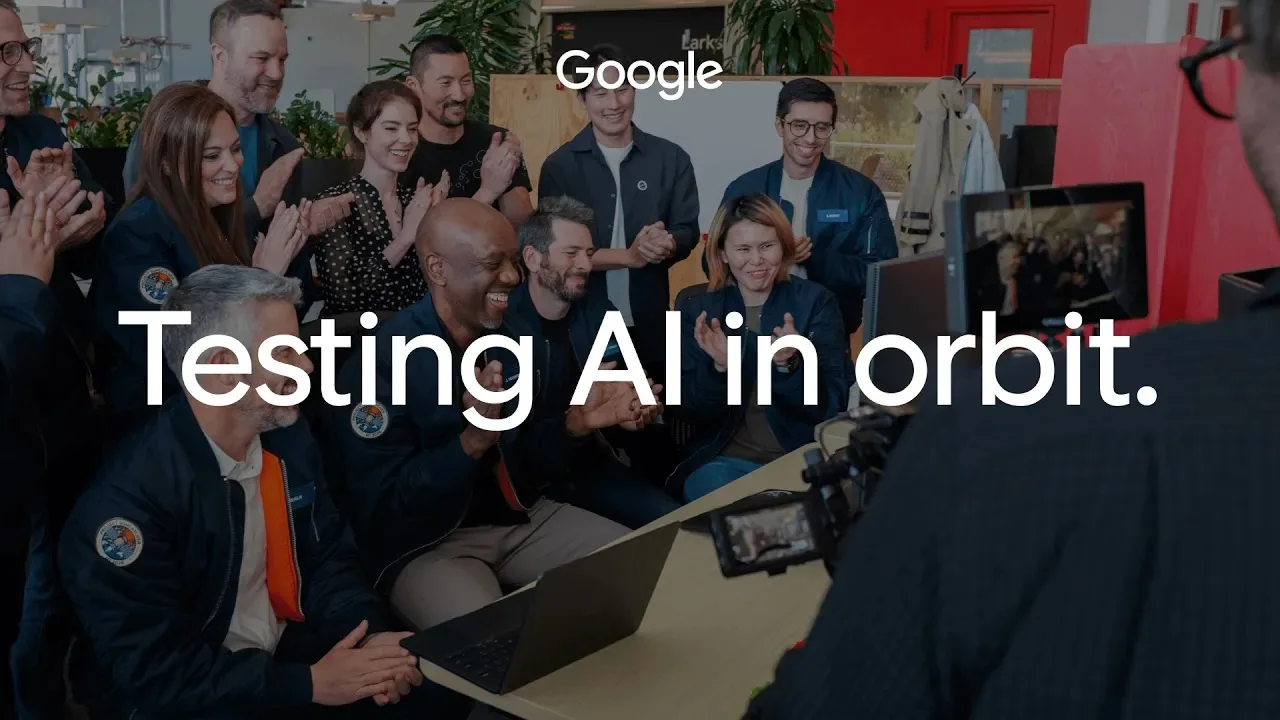
On 30 October 2026, Google said its Project Suncatcher prototype satellite, launched on 1 October, returned the first AI response from a data center class TPU chip in orbit. Google sent a prompt to its Gemma 4 open model asking for a haiku about space. The poem came back as the satellite passed Svalbard, Norway.
The short version
- 01Google says its Project Suncatcher prototype satellite sent back the first AI response from a data center class TPU in orbit.
- 02The AI was Gemma 4, Google's open model. Google asked it for a haiku about being in space.
- 03The reply came down as the satellite passed Svalbard, Norway.
- 04Google also tested space-themed limericks and status reports from the satellite.
- 05Next are tests of heat and radiation, then twin interconnected satellites in 2027.
At a glance
| Announced | 30 October 2026 |
|---|---|
| Company | Google (Google Research) |
| Project | Project Suncatcher |
| Satellite launched | 1 October 2026 |
| AI model | Gemma 4 (open model) |
| Chip | Data center class TPU |
| Reply received over | Svalbard, Norway |
| Next milestone | Twin interconnected satellites, 2027 |
| Status | Confirmed by Google |
What did Google announce?
On 30 October 2026, Google Research published a post on its Project Suncatcher prototype satellite. Google says it has received its first response from the satellite.
Google describes the milestone as its "Hello World": the first-ever AI response from a data center class TPU in orbit. A TPU is Google's own chip for running AI.
What did the satellite say?
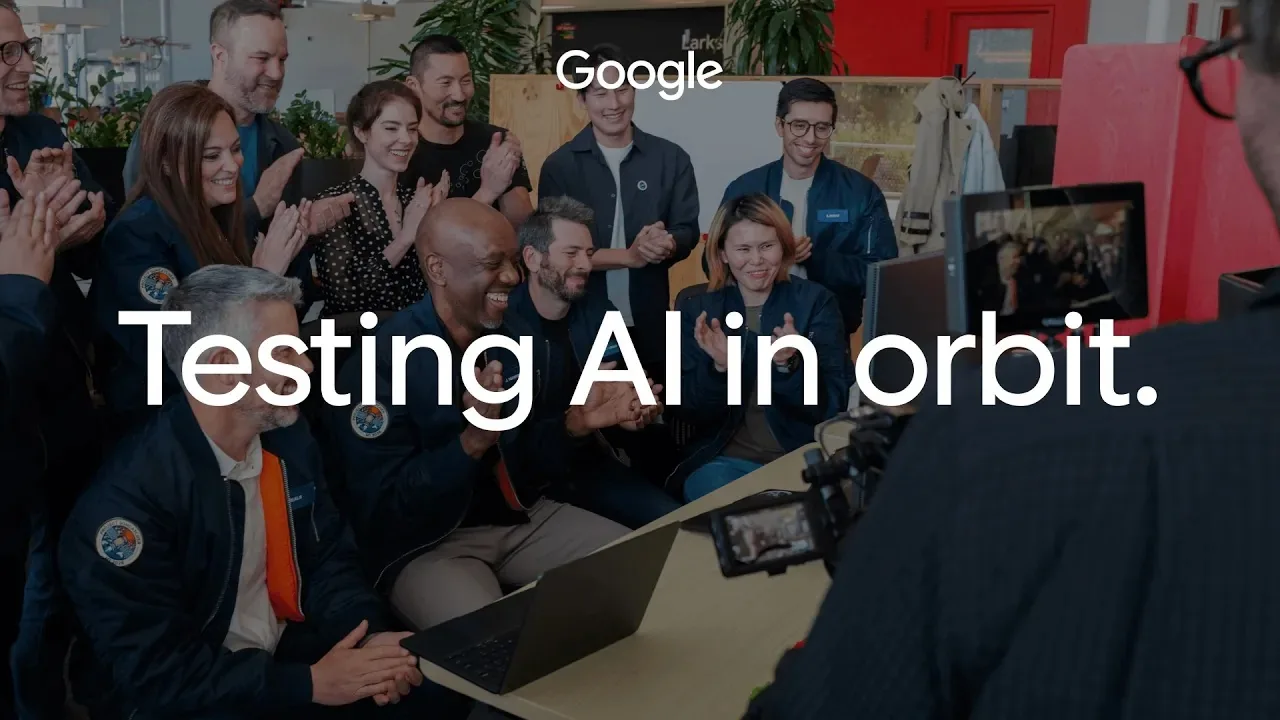
During a ground-station pass, Google sent a first prompt to the Gemma 4 open model on board. It asked for a haiku about being in space. As the satellite passed Svalbard, Norway, the poem came back to Earth.
Google says it then tested space-themed limericks and prompts that report the technical status of the payload systems.
Blue marble below / Data streams in silent grace / Starlight feeds my core.
Gemma 4, on Google's Suncatcher satellite
What is Project Suncatcher?
Google calls it a long-term research moonshot to explore powering AI compute in space. Google launched the prototype satellite on 1 October 2026, then spent several weeks on a commissioning checklist that included powering up the host and TPU trays and running early machine learning tests.
In a research post from November 2025, Google described the idea as satellites powered by the sun, carrying Google TPUs and linked by light-based connections.
What happens next?
Google says it will run more tests on how its TPUs perform under thermal stress and radiation in orbit. It says that checking its chips can run workloads reliably in space paves the way for its next milestone: twin interconnected satellites in 2027.
Why does it matter?
It is an early step. This was one satellite and a short poem, and Google has not said how long such chips would last in orbit. But it shows Google is testing whether AI chips can run in space, something it frames as a long-term research bet.
What's next?
Heat and radiation tests, then the two-satellite test planned for 2027. Open Loop News will report what Google confirms.
Questions people ask
What did Google's satellite do?
Google says it ran its Gemma 4 AI model on a TPU chip in orbit and sent the answer, a haiku, back to Earth.
What is a TPU?
A TPU is a chip Google designs to run AI. Google says this one is data center class.
When was the satellite launched?
Google says it launched the Project Suncatcher prototype satellite on 1 October 2026.
Is there a data center in space now?
No. Google calls Project Suncatcher a long-term research moonshot, and this was a first test of one chip's response.
What is next for Project Suncatcher?
Google plans heat and radiation tests, then twin interconnected satellites in 2027.
Sources
- PrimaryGoogle Research: We've received our first response from the Project Suncatcher prototype satellite (30 Oct 2026)
- PrimaryGoogle Research: Exploring a space-based, scalable AI infrastructure system design
Why "Confirmed"? We label a story "Confirmed" when the company or government announced it itself. Spotted an error? Email hello@openloopnews.com and we will correct it.