Anthropic's AI agents now work six times the hours of its staff
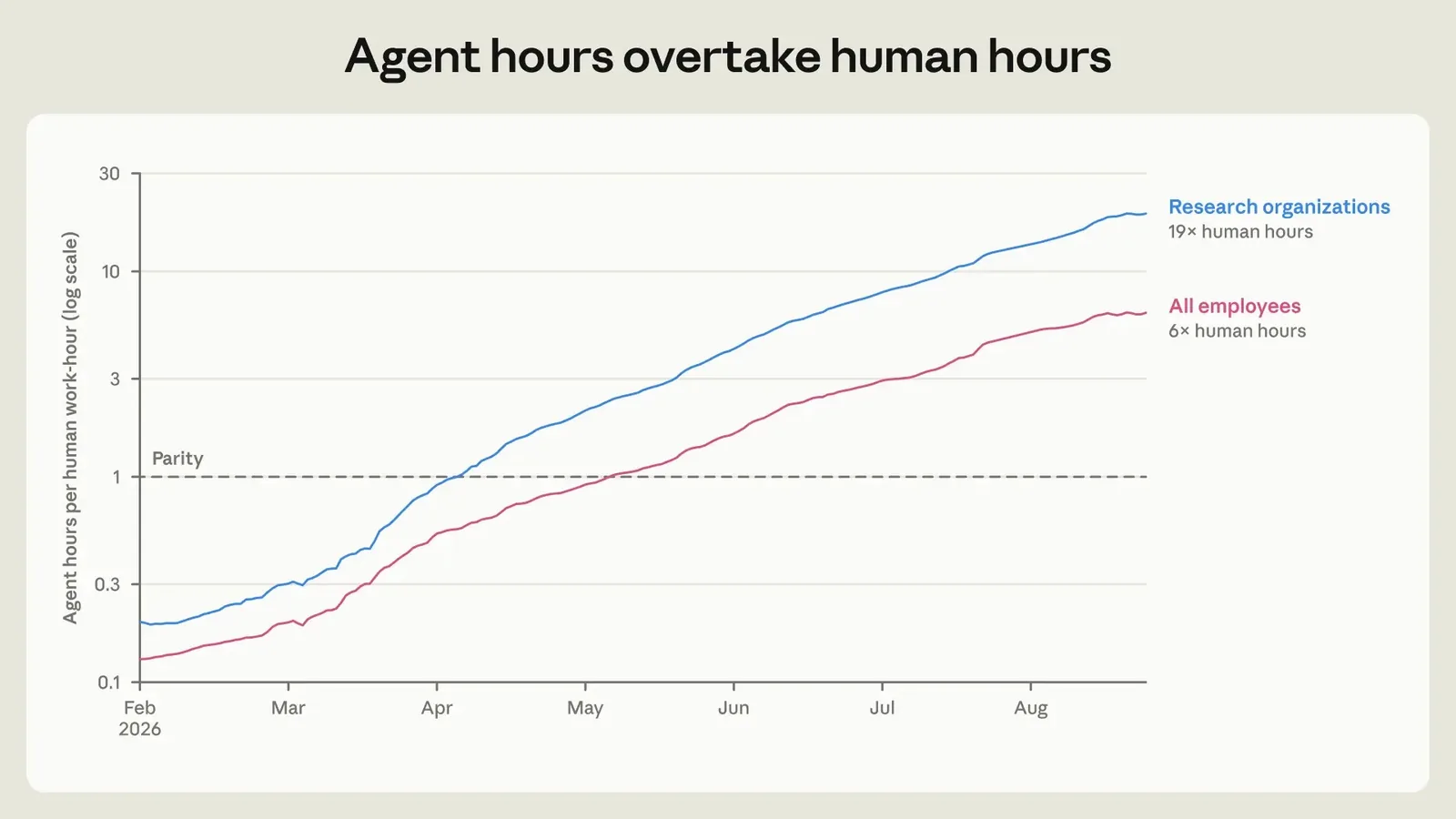
On 16 October 2026, Anthropic published a study of its own workforce. It says that by August, the AI agents its employees run worked six times as many hours as the employees did. The share of junior technical staff fell from 21% to 14% since early 2025. Anthropic says human attention is now the bottleneck.

The short version
- 01Anthropic published the study on 16 October 2026, using its own internal data and 17 employee interviews.
- 02By August, interactive AI agent hours outnumbered employees' six to one, Anthropic says.
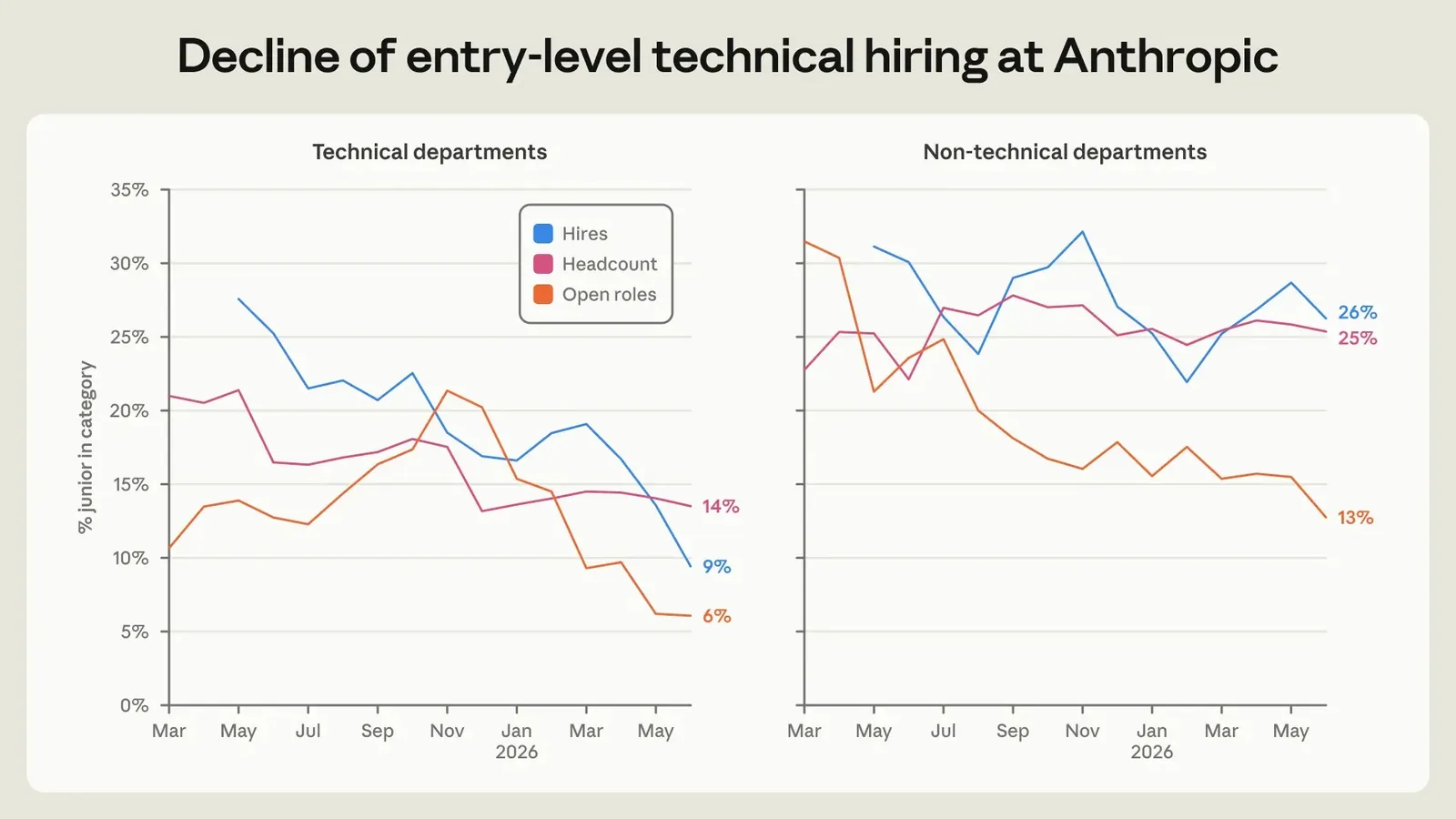
- 03Junior staff fell from 21% to 14% of technical departments, and from 27% to 9% of technical hires.
- 04Output per person rose: more code, more sales closed, more contracts processed.
- 05Human attention is now the bottleneck, Anthropic says.
At a glance
| Published | 16 October 2026 |
|---|---|
| By | Anthropic's economics researchers |
| Data | Internal Anthropic data and 17 employee interviews |
| Agent hours vs human hours | 6 to 1 by August 2026 |
| Junior share of technical staff | 21% to 14% since early 2025 |
| Junior share of technical hires | 27% to 9% |
| Status | Confirmed |
What did Anthropic find?
In a report published on 16 October 2026, Anthropic looked at how AI has changed work and hiring inside the company. It says that by August, the AI agents employees directed worked 6 times as many hours as their human handlers.
The report draws on internal data about employment, AI use, output, surveys, calendars and hiring decisions, plus 17 employee interviews. It is Anthropic's own study of itself, so outside researchers have not checked it.
Is Anthropic hiring fewer junior staff?
Anthropic says yes, for technical roles. Junior staff were 21% of technical departments in early 2025 and are 14% now. Junior technical hires fell faster, from 27% to 9% of hires.
The report says technical teams also shrank as a share of the company, from 61% to 56%, partly because sales, finance and recruiting hired faster, and partly because coding tools let non-technical staff build software themselves.
Is AI making Anthropic's staff more productive?
Anthropic says output rose: more code per person, more sales closed per rep and more contracts processed. It followed 192 engineers as they adopted coding agents, against 74 who did not, and says output rose after adoption.
It adds a warning: more code does not necessarily mean better code or business impact. The company also grew fast over the same period.
What is the catch?
Human attention has become the bottleneck, the report says. Even for non-technical staff, reading all the output of their Claude agents would take half the work week.
One engineer described the job as facing "an army of Claudes, with every one asking for my attention." Employees turn to "meta-work", such as building tools to watch their agents.
An army of Claudes, with every one asking for my attention.
An Anthropic engineer, in the report
Why does it matter?
Anthropic is a company built around AI, so it is an early look at how work could change elsewhere. Its numbers show fewer junior technical hires and much more AI work per person. They come from one company, and Anthropic sells the AI it describes.
What's next?
Anthropic says it set up an early warning system to track jobs at risk of disruption and has prioritised moving people into new roles inside the company.
Questions people ask
What did Anthropic publish?
A study called "How employment is changing at Anthropic", published on 16 October 2026.
How much do the AI agents work?
By August, employee-directed agents worked 6 times as many hours as the employees, Anthropic says.
Is Anthropic hiring fewer junior engineers?
Junior technical hires fell from 27% to 9% of hires, and junior staff from 21% to 14% of technical departments, since early 2025.
Does AI lower the quality of code at Anthropic?
Anthropic says more code does not necessarily mean better code, and it tested for low-quality AI code in its commits.
Has anyone outside Anthropic checked the numbers?
Not yet. The report uses Anthropic's internal data.
Sources
- PrimaryAnthropic: How employment is changing at Anthropic (16 Oct 2026)
- CoverageTechCrunch: Anthropic says its workforce has become less junior and is spending more time in meetings (17 Oct 2026)
Why "Confirmed"? We label a story "Confirmed" when the company or government announced it itself. Spotted an error? Email hello@openloopnews.com and we will correct it.